
How to Deduct Tree Removals & Landscaping on Your Rental Property Taxes
Key Takeaways
- Landscaping for rental property is either deductible or depreciated depending on its purpose: routine maintenance is usually deductible, while upgrades that add value must be capitalized.
- Tree removal is typically deductible when done for safety or damage prevention, but removal tied to improvements must be depreciated.
- Most capitalized landscaping follows a 15-year depreciation life for rental property, so you recover costs over time instead of all at once.
- Deduction costs on rental property depend on clear records, which is why rental property accounting software is important—especially if you use a property manager or oversee multiple rental investment units where vacancy costs matter.
When you invest in landscaping for rental property, you’re not only improving the curb appeal of your property–you’re also enabling a tax opportunity that could save you money this April. Your first question after incurring this expense might be, “Can I deduct this landscaping expense on my rental property taxes?”
The answers depend on whether your rental property landscaping expenses qualify as repairs or capital improvements under IRS rules. Some costs can be deducted right away while others must be depreciated over time. Knowing the difference will make a meaningful impact on your cash flow, maintenance costs, and tax bill.
In this article, we’ll talk about how landscaping for rental property is treated for tax purposes, when tree removal is considered deductible, how depreciation applies, and how you can property track and report these expenses.
Repairs vs. Improvements
For rental properties, the IRS distinguishes between repairs and improvements, and this classification determines how you deduct landscaping and tree removal costs. This is why it is vital to understand the difference between a repair and an improvement.
Repairs are expenses that maintain your property’s current condition without adding significant value or extending its useful life, and they are typically fully deductible in the year they occur. Improvements, on the other hand, add value, extend useful life, or adapt the property to a new use and must be capitalized and depreciated over time rather than deducted immediately.
Below are some examples of repairs that are deductible:
- Fixing broken irrigation parts
- Trimming a tree that’s threatening the stability of a structure (or nearby walls)
- Mowing, weeding, or seasonal landscape and maintenance (including routine lawn maintenance and minimal maintenance touch-ups)
And here are some examples of improvements that are capitalized and depreciated:
- Installing a brand new patio (often using more durable materials)
- Regrading the yard to enhance the property
- Adding decorative landscaping to increase the property’s value (for more aesthetic appeal and increased property value)
Tree removal and basic landscaping can be either a repair or an improvement depending on the purpose.
When Tree Removal Qualifies as Deductible Landscaping for Rental Property
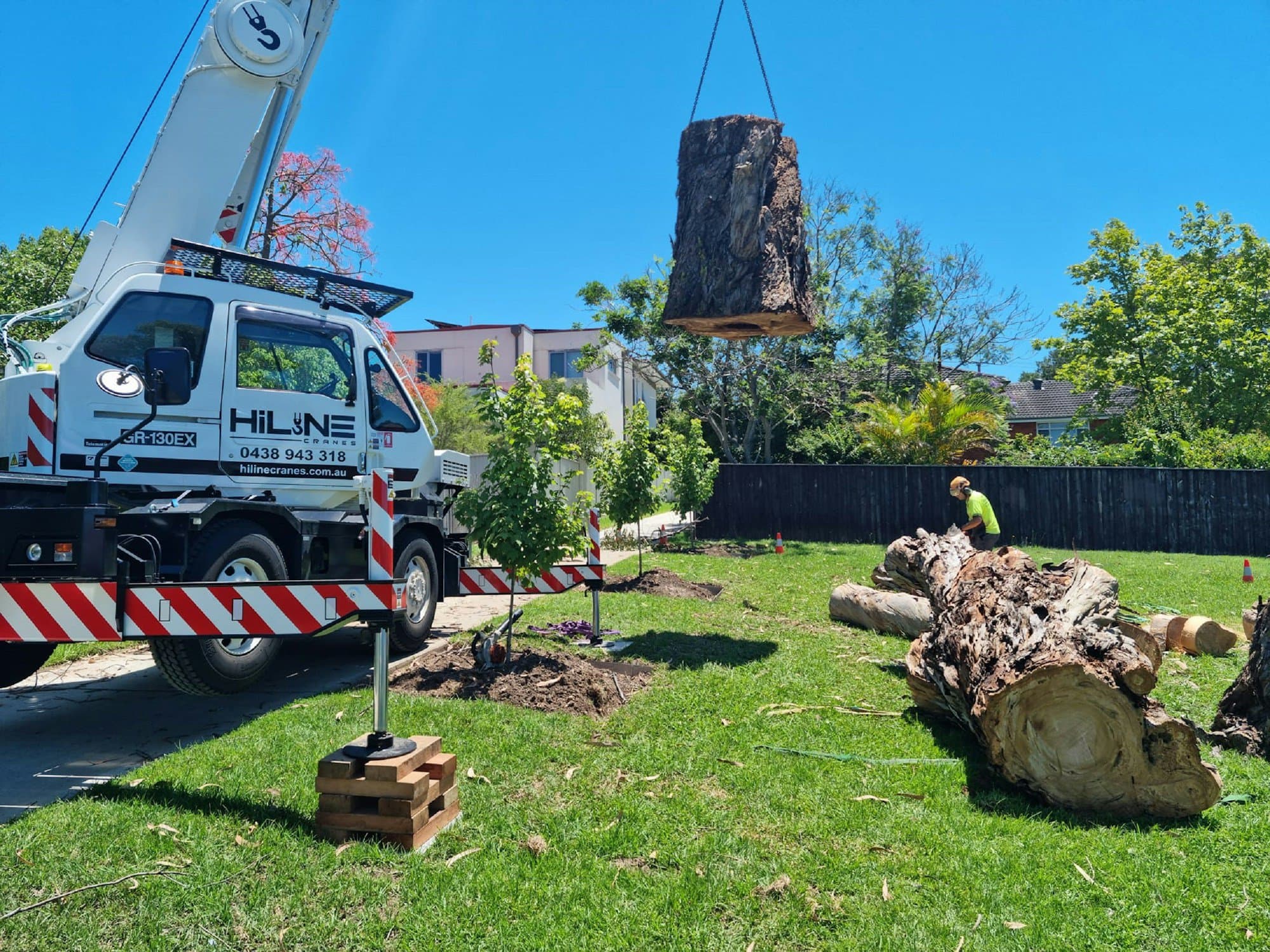
Tree removal can typically be deducted as part of landscaping for rental property when it is ordinary, necessary, and directly tied to maintaining the property or ensuring tenant safety. That means removing a dead, diseased, or storm-damaged tree that could threaten structures, utilities, or occupants usually qualifies as a repair/maintenance expense that is deductible in the year incurred. Tree removal on business or rental properties may be considered a deductible maintenance cost when it prevents damage or preserves the property’s condition.
Examples may include:
- Removing a storm-damaged tree that could fall onto the building
- Cutting down a hazardous dead tree near tenant walkways
- Clearing a tree whose roots are undermining utilities
When Rental Property Landscaping Must Be Capitalized
Not all landscaping and tree removals come with immediate tax deductions. Landscaping that significantly enhances property value or extends its useful life must be capitalized and depreciated. The IRS treats expenses that result in a betterment, restoration, or adaptation of property for a new use as capital expenditures that cannot be deducted in the year paid.
This means if tree removal or landscape work is part of a larger enhancement project such as clearing land for a new structure, adding extensive aesthetic features, or creating outdoor amenities, it is considered an improvement and must be added to the property’s basis and depreciated over its useful life.
Examples where landscaping must be capitalized may include:
- Removing trees to build a new garage or unit
- Clearing land to add an outdoor amenity (e.g., a pool or a more attractive outdoor space)
- Installing new outdoor walkways for tenants
It’s always important and worthwhile to consider what new amenities, repairs, and maintenance may qualify for tax deductions.
Landscaping Depreciation Life for Rental Property Explained
When landscaping expenses must be treated as capital improvements, they can’t be deducted all at once. Instead, these capitalized costs are depreciated over their useful life, which is simply the period over which the IRS expects the improvement to provide value.
For rental property tax purposes, most land improvements are depreciated over 15 years under the Modified Accelerated Cost Recovery System (MACRS). This means you recover the cost a little each year rather than in a single deduction. Because the IRS considers the nature of the kind of work done, understanding depreciation life will help you plan the tax impact more accurately.
How to Claim Rental Property Landscaping Deductions on Your Taxes
To claim landscaping and tree removal deductions on your federal tax return, you first need to determine whether the expense is a repair or a capital improvement. Once classified:
- Use Schedule E (Form 1040) to report rental income and expenses, including deductible landscaping costs and tree removal.
- Put routine landscaping and allowable maintenance expenses under categories like “Repairs and Maintenance” or “Other” depending on which best fits the details of the work.
- Capitalized landscaping costs go on the appropriate line for improvements and then into your depreciation schedule.
Accurate categorization ensures your landscaping deductions are reported properly and may prevent potential problems during an IRS audit or review.
Schedule E
As stated previously, most rental property owners use Schedule E (Form 1040) to report rental income and tax deductions, including landscaping and tree removal that qualify as ordinary and necessary expenses. On Schedule E, deductible landscaping costs are typically listed under “Repairs and Maintenance” or “Other Expenses” if they don’t fit well under a specific line item. Landscaping that must be capitalized is not reported here directly but instead flows through your depreciation entries, which are also referenced on Schedule E. Keeping landscaping and maintenance organized on Schedule E streamlines your tax filing to ensure that you take full advantage of the deductions you’re entitled to.
The alternative to Schedule E is Form 8825, which is used to report rental property income/expenses by partnerships and S corporations.
Rental Property Landscaping Expenses You Can Usually Deduct
Now that we’ve talked about how to deduct certain kinds of maintenance and landscaping, as well as what qualifies, let’s talk common kinds of rental property landscaping that are often deductible. The IRS generally requires that the costs be ordinary and necessary expenses related to managing, maintaining, or preserving your rental property. This means everyday upkeep that keeps the property in rentable condition can usually be deducted in the year it’s paid, while major improvements must be capitalized and depreciated over time.
Here are a handful of common landscaping expenses that are usually deductible:
- Routine lawn care and yard maintenance: Mowing, trimming, weeding, fertilizing and similar services that preserve the property and protect curb appeal.
- Tree trimming: Any minor tree removal tied to safety or preventing damage.
- Seasonal cleanup: Raking leaves, clearing debris, and preparing grounds for tenant occupancy.
- Pest control related to landscaping: Treating turf or beds to keep the outdoor area safe and usable for tenants.
- Irrigation repairs: Repairing or maintaining sprinkler heads or irrigation lines (not full replacement, like adding a brand-new automated irrigation system).
- Refreshing beds with mulch: Simple bed refreshes that maintain appearance without materially upgrading the property.
- Basic care for low-maintenance plants and shrubs: Pruning and replacing small items to keep a neat look.
These costs are typically reported as repairs and maintenance on your tax return because they help maintain the current condition of the property rather than add significant value. Ensure you maintain solid records like invoices, receipts, and notes that connect the work to rental use in the case of a review by the IRS.
Simplifying Deductions with Rental Property Accounting Software
Tracking landscaping expenses, tree removals, and other rental deductions is much easier with rental property accounting software. Instead of juggling spreadsheets and receipts—especially if you have a property manager, manage vacation rental properties, or manage multiple properties—platforms like Ledgre centralize your income and expenses in one place, helping you stay organized year-round and ready for tax season.
Ledgre automates rental bookkeeping by syncing directly with your bank, categorizing transactions, and generating real-time financial dashboards. You can track landscaping costs, repairs, and capital improvements by property, produce profit & loss reports, and export tax-ready data (including Schedule E–style reporting!) in just a few clicks. Ledgre also lets you import historical transactions from spreadsheets, so you don’t have to wait for a new fiscal year to get started.
The result for you is less manual data entry, cleaner records, and clearer visibility into which expenses are deductible versus depreciable. It’s an approach that not only helps you save in April, but also supports smarter decisions around changing landscape needs, ongoing maintenance costs, and the tangible benefits of curb appeal that can help you attract better tenants.
Conclusion
Understanding how landscaping for rental property is treated at tax time can make a real difference to your bottom line. Whether you’re asking, “Can you deduct landscaping costs on rental property?” or just trying to distinguish repairs from improvements, navigating landscaping depreciation life rental property rules can be difficult. It all comes down to proper classification and accurate records.
From routine rental property landscaping maintenance (like lawn maintenance, mulch, and trimming shrubs) to larger capital improvements (like installing raised garden beds, a new patio, or adding artificial grass for minimal upkeep), knowing what’s deductible now versus depreciated over time helps you stay compliant while maximizing savings. And with rental property accounting software like Ledgre to organize your expenses and generate tax-ready reports, managing landscaping deductions becomes much simpler.
Disclaimer: Ledgre does not provide tax or legal advice. All information and materials available on this site are for general informational purposes only. Contact a tax professional for advice with respect to a specific tax matter.
FAQs
Can a landlord charge for landscaping?
Yes—oftentimes, landlords can charge tenants for landscaping. In many cases, a landlord can charge for landscaping as long as the lease clearly explains who is responsible and how the cost is handled, and the charge is disclosed and reasonable. The most important point is that landscaping charges should be spelled out in the lease (whether it’s included in rent, billed separately, or assigned to the tenant), and any chargebacks should be documented so they’re defensible if questioned.
Is landscaping deductible for a rental property?
Yes, landscaping on your rental property can be deductible–as long as it’s routine maintenance. If the landscaping expense is ordinary and necessary and primarily keeps the property in good operating condition—like regular yard upkeep—it is usually deductible in the year incurred.
If the work crosses into improvement territory because it materially upgrades the property, then it is typically capitalized instead of immediately deducted, and you recover the cost over time through depreciation. (Think: routine cleanups and low-maintenance plants versus installing a brand-new well-landscaped rear garden or major hardscaping.)
Is tree removal tax deductible for a rental property?
Tree removal is sometimes treated as a deductible expense—specifically, when it’s done for safety, damage prevention, or routine property upkeep (especially if the tree is dead, hazardous, or storm-damaged). If the removal is tied to a larger project that meaningfully improves the property, the cost may need to be capitalized. The key difference is whether the expense is restoring/maintaining the property (deductible) versus upgrading it (capitalized).
Where do landscaping expenses go on Schedule E?
If the landscaping is routine upkeep, it is typically recorded under the Schedule E category ‘repairs and maintenance’ (or sometimes ‘other expenses’) and deducted for that tax year. If the landscaping is a capital improvement, the cost is generally not expensed immediately; instead, it is capitalized and depreciated, with the depreciation then flowing into your rental tax reporting. The most important practice is keeping clear records and descriptions so you can support why the cost was treated as a repair versus an improvement.
How should a landlord document and track landscaping expenses?
Save the receipt/invoice and proof of payment, note what was done and for which property, and categorize it as maintenance (deductible) or an improvement (capitalize/depreciate). If you bill a tenant back, keep the lease clause and the charge record. This also helps you tie landscaping decisions to outcomes like curb appeal, visual appeal, and attracting great tenants with minimal upkeep and minimal maintenance plans.